
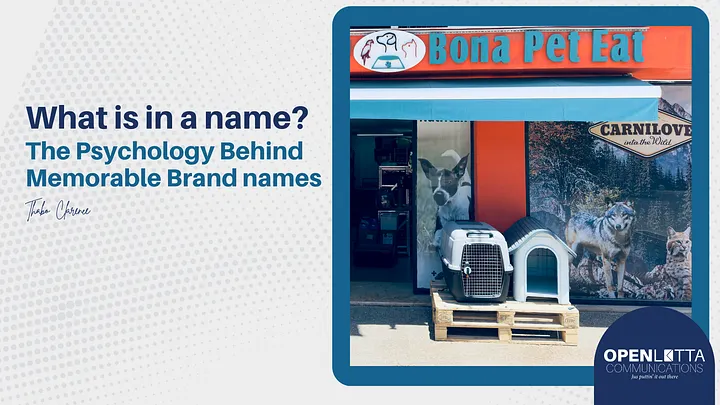
A couple of weeks ago, while heading toward the golden sunset over Riviera Beach by the Aegean Sea, I had an unexpected encounter that made me rethink a fundamental aspect of branding: the name. I was passing by the Plaza Resort in Anavyssos, lost in thought, when a small pet shop caught my eye with its witty, unconventional name — “Bona Pet Eat.” In a country where almost everything is written in Greek, this playful English wordplay stood out like a neon sign. The clever twist on “Bon Appétit” sparked a deeper question for me: What is really in a name?
As someone passionate about branding, I found myself revisiting a fundamental question: What’s the story behind such a genius name? What is in a name? And more importantly, why do some names stick while others fade into oblivion?
Driven by curiosity, I stepped inside the shop and was warmly greeted by a pleasant gentleman with a bright smile, who introduced himself as Dimitri Alexiou. When he asked how he could assist me, I simply smiled and said, “The name, my friend, the name.” Dimitri chuckled, clearly familiar with the intrigue it sparked. He explained that the name often catches the attention of passersby, even those who have no interest in pet food. As for how the name came to be? Well, it turns out that when he opened the shop about a decade ago, he had a dog named Bona. I am sure you can finish off the painting right?
The Genius of “Bona Pet Eat”
From a Strategic Communications standpoint, I couldn’t help but admire how unforgettable the name “Bona Pet Eat” is. At first glance, it might seem like a playful twist on words, but it’s much more than that. A great name isn’t just a label — it’s a story, a strategy, and a tool for creating emotional connections.
This particular name checks off several key attributes of strong brand naming:
Purposeful: It communicates the business’s function — pet food — immediately.
Memorable: The phonetic similarity to “Bon Appétit” makes it easy to recall and pleasant to say.
Relatable: Pet owners, who often see their pets as family members, resonate with the idea that pets deserve an appetizing experience just like humans.
Authentic: The name’s origin is personal and genuine, as it was inspired by the owner’s beloved dog, Bona. This backstory adds a layer of sincerity and emotional depth, making the name feel more real and relatable.
The use of phonetics in brand naming is critical because it makes the name easy to say and hard to forget. Psychologically, when a name rolls off the tongue effortlessly, it lodges itself deeper in our memory. That’s the magic of “Bona Pet Eat” — a fun, quirky, and memorable name that strikes an emotional chord with pet owners.
The Power of Emotional Connection in Branding
The emotional connection a name creates can be one of the most powerful tools in branding. In the case of “Bona Pet Eat,” the name subtly anthropomorphizes the pet experience. Just as humans enjoy fine dining, pets deserve delicious meals too.
This kind of relatability fosters an instant emotional bond. When a brand name sparks curiosity, people are more likely to remember it, talk about it, and, in turn, trust the brand. Studies show that brands that evoke positive emotions are 70% more likely to build strong customer loyalty. A name that taps into these emotions can turn casual passersby into loyal customers.
Naming Strategy: Local vs. Global Appeal
Now, let’s consider the brand’s strategy. “Bona Pet Eat” operates in a predominantly Greek-speaking region but uses English in its name. This is a calculated move. Choosing English for the name positions the brand as international and cosmopolitan, which not only attracts the local market but also appeals to the tourist population passing through the area.
However, there’s a balancing act. While English broadens the brand’s reach, it could alienate a segment of the local population who may prefer a Greek name. Yet, this playful and creative name transcends language barriers, especially with younger or more internationally minded audiences who appreciate the wit and originality behind it.
The challenge many brands face is whether their name can travel well globally without losing its cultural relevance. Let’s look at how South African brands navigate this balance.
A South African Context: Bathu, MoFaya & Duma Collective

Bathu is a perfect example of a brand that rooted itself deeply in South African culture while achieving international recognition. The name “Bathu,” which means “shoe” in colloquial South African languages, is both culturally relevant and easy to remember. It taps into the township culture, connecting with its audience on a personal level. The name reflects the brand’s roots and identity, making it incredibly recognizable locally. However, because of its simplicity and cultural resonance, it’s gaining ground globally without feeling too local or inaccessible.

Similarly, MoFaya, an energy drink brand created by DJ Sbu, uses its name to embody energy, vibrancy, and cultural pride. The term “MoFaya” translates to “more fire” in local slang, representing energy and excitement. This makes the brand highly marketable within South Africa, as it resonates with the cultural language and identity of its target market. MoFaya’s name reflects the entrepreneurial spirit and ambition of a new generation of Africans — an identity that travels well across African markets and diasporic communities.

Duma Collective, Interestingly, the story behind Duma Collective’s name is rooted in a personal reflection by its founder, Sibu Mabena. Initially, the agency carried the name Mbuduma Communications — derived from the Mabena clan name, as “Mbuduma” is part of their clan praise. However, Sibu soon realized that the name posed challenges in pronunciation for both black and white clients alike. One client even preferred to refer to her team as “Sibu and her team” rather than attempting to say “Mbuduma.”
Recognizing this early on, Sibu simplified the name by dropping the “Mbu” and keeping “Duma,” which can mean loud, famous, or aggressive. This decision perfectly aligned with her agency’s mission of making brands “loud” and famous. To further capture the collaborative spirit of the company, she added “Collective.” And thus, Duma Collective was born — a name that is synonymous with impactful branding and marketing. Intriguing stuff one discovers when you start to interrogate what is in a name I tell you.
One of the most iconic sports brands in Africa is Orlando Pirates, a name rooted in the history of Orlando township in Soweto. Originally known as Orlando Boys Club, the team earned the nickname “amapirate” after some members broke away, symbolizing rebellion and independence. This bold, rebellious spirit eventually led to the official adoption of the name Orlando Pirates. Over time, the club became synonymous with resilience and strength, transforming into a powerhouse in African football. The name reflects both its local roots and larger identity, resonating deeply with fans and symbolizing triumph over adversity. Name brands such as MoFaya and Duma Collective, Orlando Pirates shows how a name can embody cultural relevance and shape a lasting emotional connection with its audience.
Personal Branding: Lebolion SA, Penuel the Black Pen

As of late, late being post 2010 era, personal brands require as much strategic thought as corporate ones. Lebolion SA is a great example, with a name that carries deep meaning and intentionality. The journey begins with Livhuwani, her full name, which when shortened is Livhu. However, “Livhu” doesn’t roll off the tongue as easily, so she translated to another South African language — Sotho — where Lebo is a more accessible and memorable form. Anyone around the world can easily pronounce Lebo and by transitioning to Lebo, she kept the essence of her identity intact while making it easier to connect with her audience. To reflect her strength, courage, and influence, she added Lion, symbolizing power and pride. The result — Lebolion — is a name that encapsulates her values and character while making her a roaring voice in the marketing world. It’s a perfect blend of personal identity, cultural relevance, and strategic branding.
Similarly, Penuel the Black Pen is an intriguing personal brand that uses a mix of identity and symbolism. “The Black Pen” represents truth-telling, creativity, and sometimes rebellion against the status quo. Penuel’s personal brand name is recognizable and stands out in South Africa’s thought leadership and entrepreneurial space because of its cultural and symbolic resonance.
In personal branding, names like Lebolion SA and Penuel the Black Pen act as tools for building authority, trust, and identity. They resonate deeply with their audiences, reflecting both individual values and the broader cultural contexts they engage with.
Industry-Specific Naming Strategies
Naming a brand is rarely straightforward — it’s a complex puzzle with cultural, phonetic, and emotional considerations all at play. Take a look at some of the iconic brand names across industries:
Google: The name “Google” was derived from the mathematical term “googol,” which refers to the number 1 followed by 100 zeros. This playful and seemingly whimsical choice reflects the company’s mission to organize a vast amount of information. Like Apple, the name is simple, memorable, and evokes a sense of curiosity and endless possibilities, countering the complex or overly technical names often associated with search engines at the time.
Virgin: Richard Branson selected “Virgin” to reflect the company’s fresh, untainted entry into industries. The boldness of the name made it stand out in a crowded market, positioning it as adventurous and unafraid of risks.
These examples highlight a critical point: the best names align with the brand’s identity and market positioning. Whether you’re aiming for simplicity, boldness, or cultural resonance, the name must speak to your core values and audience.
The Psychology Behind Brand Names
What makes a name truly great? It comes down to psychological triggers. Names, like any form of communication, tap into our cognitive processes and emotions. Here’s a deeper look into why certain names stick:
- Phonetic Appeal: Studies show that names with smoother, more pleasant sounds (like “Apple” or “Bona Pet Eat”) are easier to remember and evoke positive associations. The brain is naturally drawn to words that flow and are easy to pronounce, which helps reinforce brand recall.
- Emotional Resonance: Names that evoke emotions — whether through humor, nostalgia, or connection to values — make a stronger impact. For example, “Bona Pet Eat” instantly taps into the love and care pet owners have for their animals, fostering emotional ties with the brand.
- Memorability Through Wordplay: Clever names or those with a double meaning often stick longer in people’s minds. They trigger curiosity, making people more likely to engage with the brand. Names like “Virgin” or “Blackberry” become unforgettable due to their creativity and unique associations.
- Cultural and Contextual Relevance: The best names resonate with the cultural context they’re in. “MoFaya” and “Bathu” are excellent examples of names that tap into local language and identity, giving them an edge in their markets. Conversely, brands that expand globally must often adapt their names to ensure relevance across cultures, making the right balance of global appeal and local connection crucial.
My Framework for Naming Success
Drawing from industry examples and personal insights, here’s a framework for evaluating a brand name’s strength:
Phonetics: Is the name easy to say and remember?
Emotional Impact: Does the name connect with the target audience on an emotional level?
Relevance: Is the name aligned with the industry and the brand’s core values?
Cultural Sensitivity: Can the name transcend cultural and linguistic barriers, or does it need localization for different markets?
This framework provides a structured way to evaluate a name’s potential impact and longevity. While every brand’s needs are unique, these four pillars can guide you toward a name that stands the test of time.
What is in a name?
A brand name is much more than just a label — it’s the emotional hook and foundation of a brand’s identity. It shapes consumer perceptions and purchasing decisions, becoming integral to their lives when done right. In today’s attention economy, where brands vie for visibility in a crowded digital space, standing out is more critical than ever. A name must be memorable and distinctive, but also practical for the online era, where social media handles, hashtags, and domain availability play a huge role in brand discoverability.
The best brand names balance creativity with simplicity, ensuring they are easy to search and share across platforms without losing their impact. Considering how a name will function across touchpoints — whether it’s social media, websites, or digital marketing — is key to lasting success in the modern marketplace.
Bona Pet Eat serves as a brilliant reminder that, no matter the size of the business, a well-crafted name can be the difference between a long lasting impression and fading into oblivion. So the next time you walk past a brand name that tickles your fancy, ask yourself: What is in that name?